2025
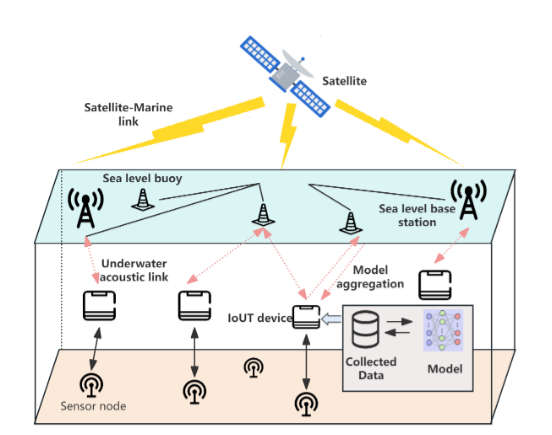
Federated Learning for Internet of Underwater Things Based on Lightweight Distillation and Data Refinement
Bin Jiang, Jiacong Fei, Fei Luo, Yongxin Liu, Houbing Herbert Song
IEEE Internet of Things Journal 2025
In this paper, an underwater federated learning framework with dual-path collaborative optimization is proposed to solve the above problems systematically through the joint design of knowledge distillation and data quality enhancement.
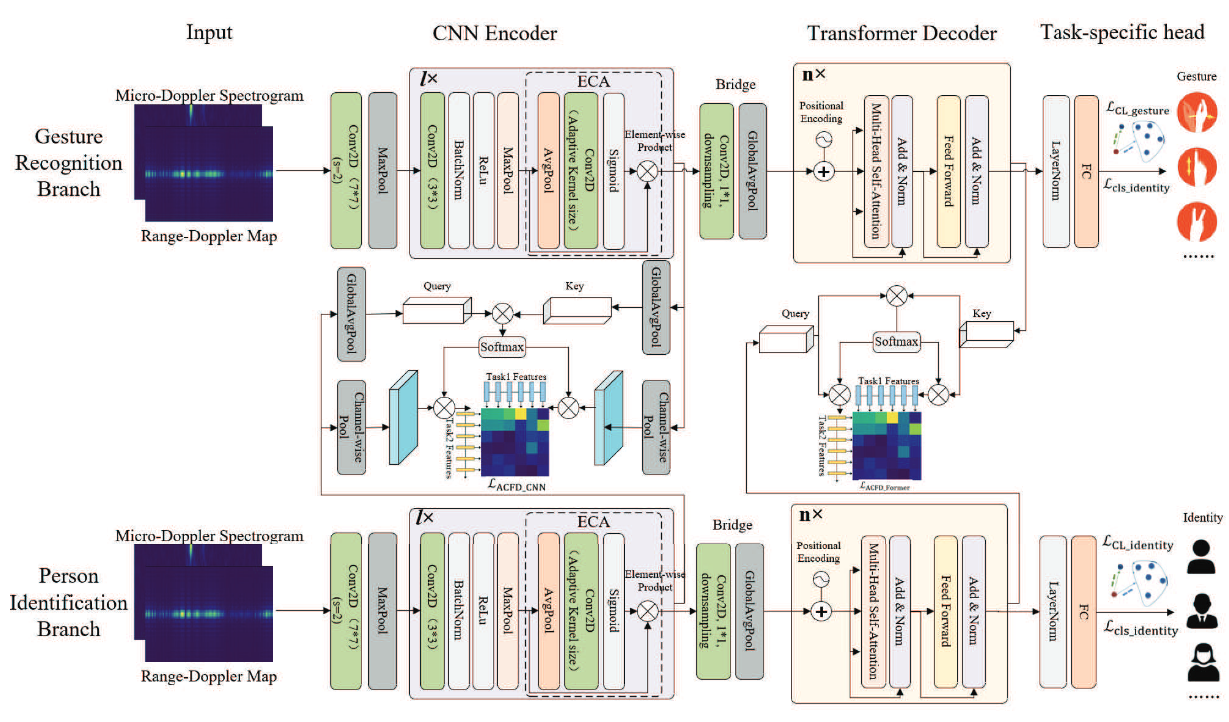
Improved multi-task radar sensing via attention-based feature distillation and contrastive learning
Fei Luo, Anna Li, Jiguang He, Zitong Yu, Kaishun Wu, Bin Jiang, Lu Wang
IEEE Transactions on Information Forensics and Security 2025
In this paper, we collected a dataset for two sensing tasks, including gesture recognition and person identification, via a miniature mm-wave radar. The raw radar signals were processed using micro-Doppler and range-Doppler techniques to extract spectral and spatial representations.
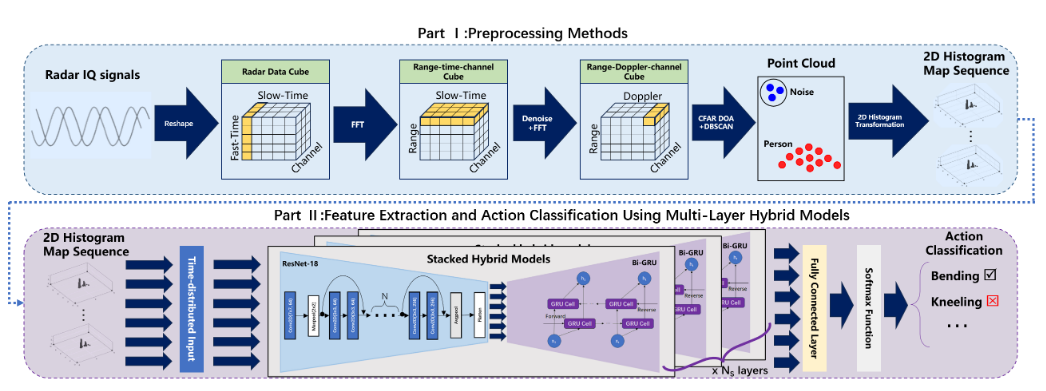
Human Activity Recognition by Using Enhanced Radar Point Cloud 2D Histograms and Doppler Feature Fusion
Guanghang Liao, Jieming Ma, Fei Luo
2025 IEEE International Conference on Robotics and Automation (ICRA) 2025
This paper presents a new precise non-invasive HAR framework based on radar point cloud 2D histograms
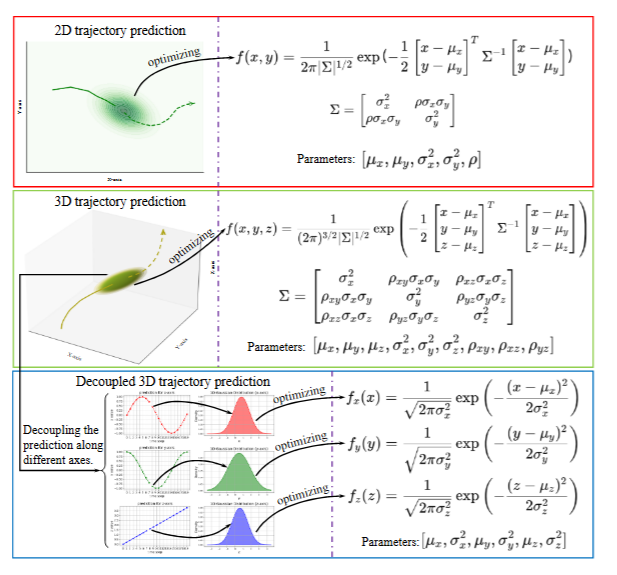
Three-Dimensional Trajectory Prediction with 3DMoTraj Dataset
Hao Zhou, Xu Yang, Mingyu Fan, Lu Qi, Xiangtai Li, Ming-Hsuan Yang, Fei Luo
ICML 2025 2025
We introduce 3DMoTraj, a large-scale dataset for 3D trajectory prediction from underwater vehicles, and propose a decoupled prediction method that significantly reduces the complexity of predicting 3D trajectories.
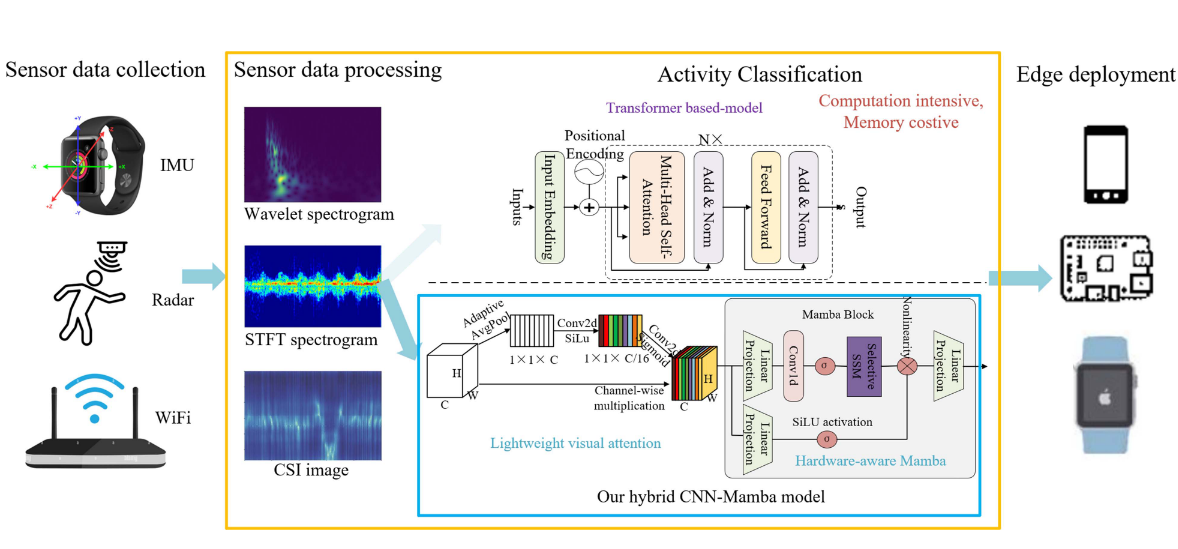
ActivityMamba: a CNN-Mamba hybrid neural network for efficient human activity recognition
Fei Luo, Anna Li, Bin Jiang, Salabat Khan, Kaishun Wu, Lu Wang
IEEE Transactions on Mobile Computing 2025
In this paper, weproposed a hybrid neural network that integrates CNN and visual Mamba, called ActivityMamba. The SE-Mamba block in ActivityMamba utilizes both CNN’s local and Mamba’s global context modeling while keeping computation and memory efficiency.
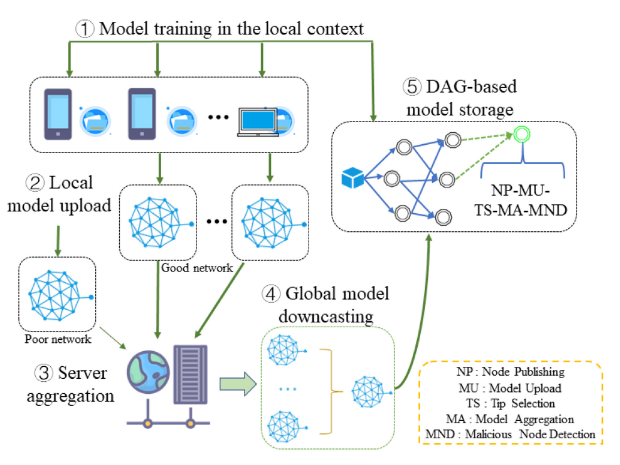
Decentralized Federated Learning in Metacomputing Based on Directed Acyclic Graph with Optimized Tip Selector
Bin Jiang, Bo Zhao, Fei Luo, Huihui Helen Wang, Houbing Herbert Song
IEEE Internet of Things Journal 2025
This article proposes an innovative framework integrating directed acyclic graph (DAG) technology with FL within a metacomputing environment.
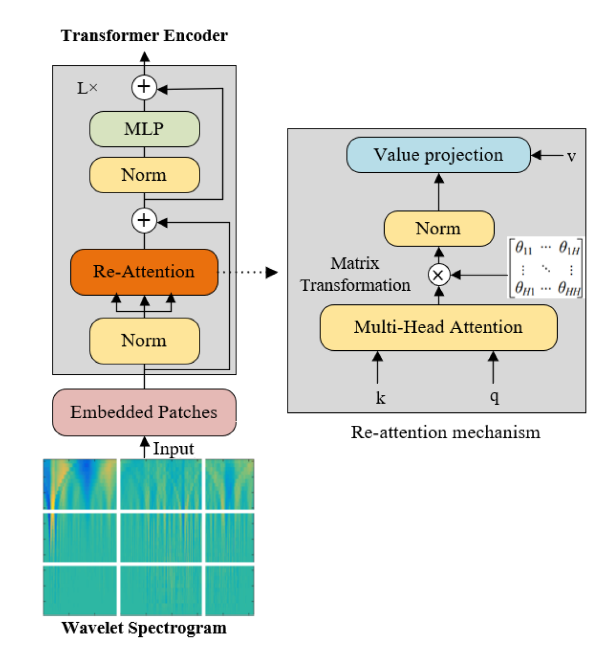
Bi-deepvit: Binarized transformer for efficient sensor-based human activity recognition
Fei Luo, Anna Li, Salabat Khan, Kaishun Wu, Lu Wang
IEEE Transactions on Mobile Computing 2025
In this paper, we investigated the binarization of a transformer-DeepViT for efficient human activity recognition. For feeding sensor signals into DeepViT, we first processed sensor signals to spectrograms by using wavelet transform. Then we applied three methods to binarize DeepViT and evaluated it on three public benchmark datasets for sensor-based human activity recognition.
2024
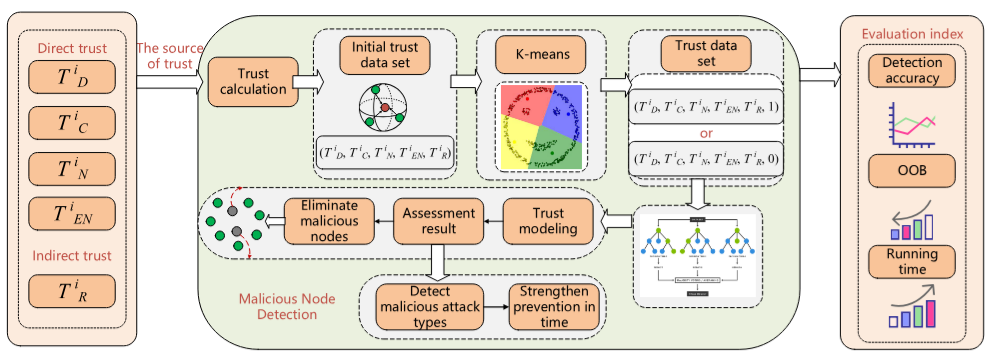
Hybrid trust model for identifying malicious attacks in underwater acoustic sensor network
Bin Jiang, Ronghao Zhou, Fei Luo, Xuerong Cui, Yongxin Liu, Houbing Song
IEEE Sensors Journal 2024
To achieve a more accurate trust evaluation of underwater sensor nodes, we propose a hybrid trust model that can identify malicious attacks on the network.
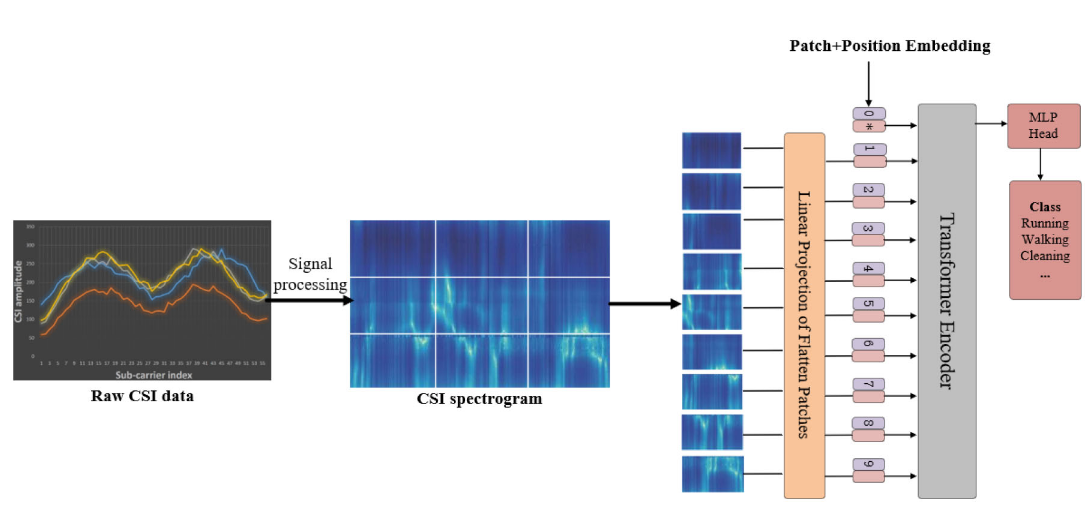
Vision transformers for human activity recognition using WiFi channel state information
Fei Luo, Salabat Khan, Bin Jiang, Kaishun Wu
IEEE Internet of Things Journal 2024
In this study, we explored five widely used ViT architectures (vanilla ViT, SimpleViT, DeepViT, SwinTransformer, and CaiT) for WiFi CSI-based HAR using two publicly available data sets, UT-HAR and NTU-Fi HAR.
2023
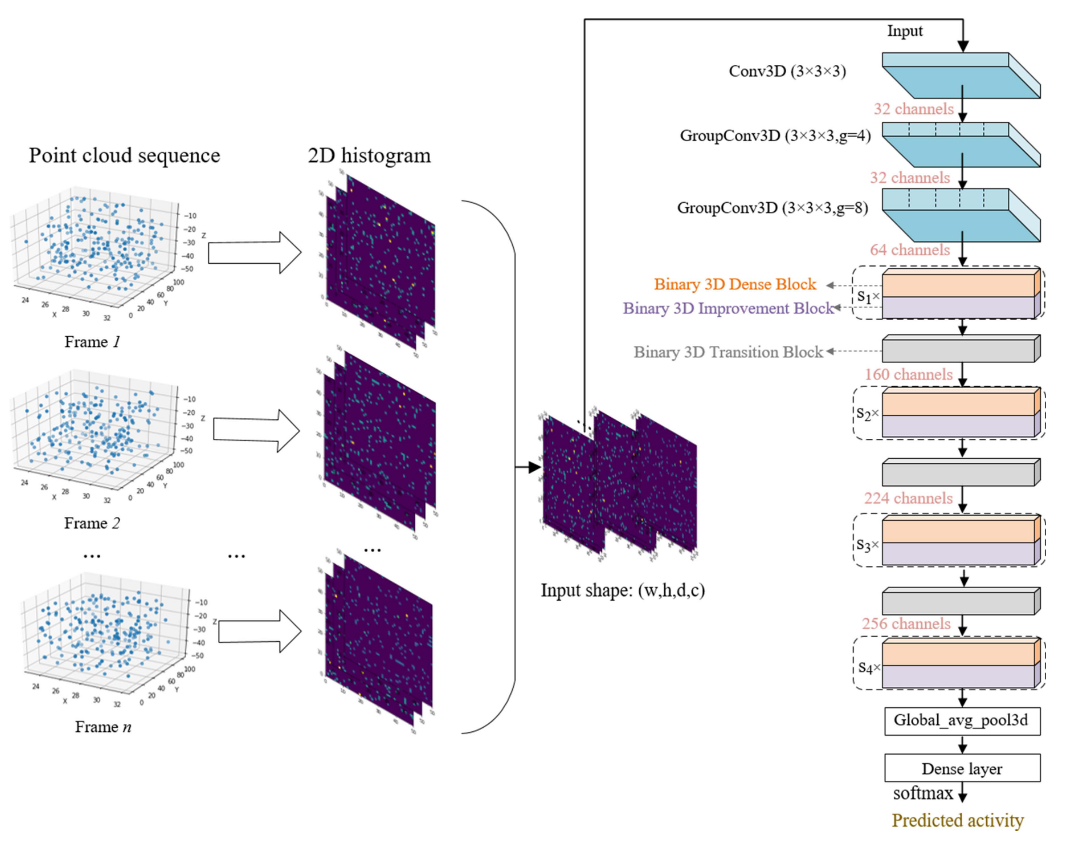
Edgeactnet: Edge intelligence-enabled human activity recognition using radar point cloud
Fei Luo, Salabat Khan, Anna Li, Yandao Huang, Kaishun Wu
IEEE Transactions on Mobile Computing 2023
In this paper, we investigated binary neural networks for edge intelligence-enabled HAR using radar point cloud. Point cloud can provide 3-dimensional spatial information, which is helpful to improve recognition accuracy.
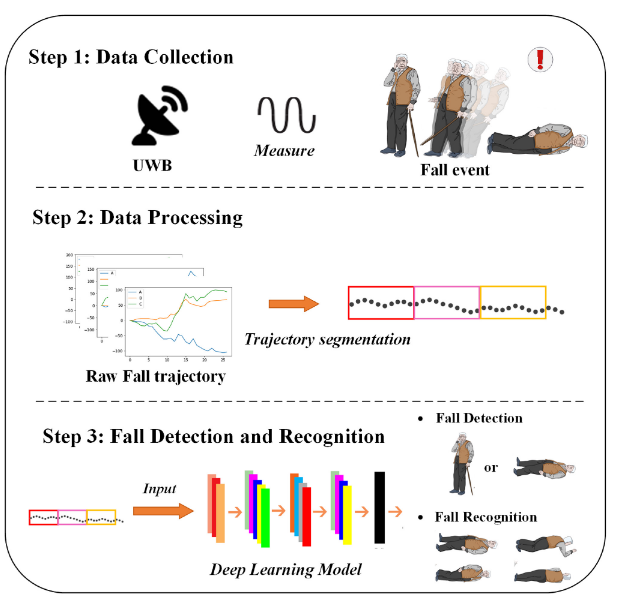
An Integrated Sensing and Communication System for Fall Detection and Recognition Using Ultrawideband Signals
Anna Li, Eliane Bodanese, Stefan Poslad, Tianwei Hou, Kaishun Wu, Fei Luo
IEEE Internet of Things Journal 2023
In this article, a cost-effective integrated sensing and communication system, namely, FallDR, is presented for fall detection and recognition using ultrawideband communication.
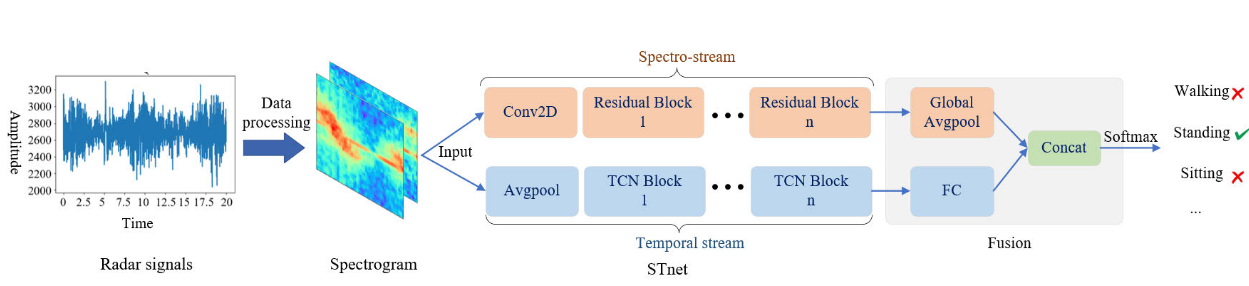
Spectro-temporal modeling for human activity recognition using a radar sensor network
Fei Luo, Eliane Bodanese, Salabat Khan, Kaishun Wu
IEEE Transactions on Geoscience and Remote Sensing 2023
In this article, in order to model both frequency properties and temporal profiles of human activity, we proposed a spectro-temporal network (STnet) that integrates a temporal convolutional network (TCN) and a convolutional neural network (CNN).
2022
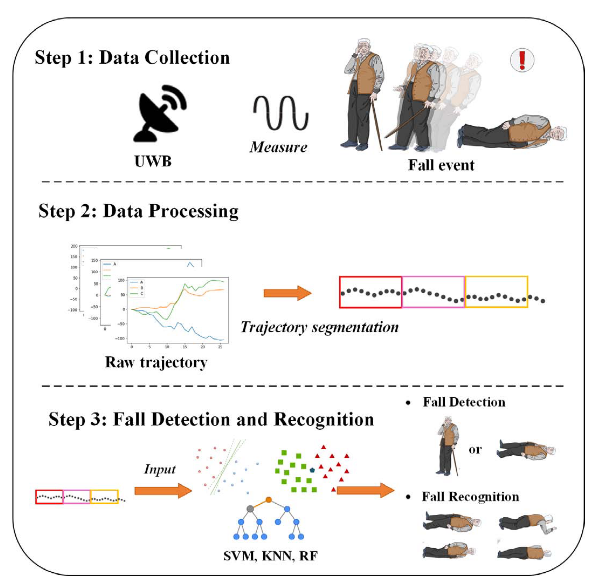
Trajectory-based Fall Detection and Recognition Using Ultra-Wideband Signals
Anna Li, Eliane Bodanese, Stefan Poslad, Tianwei Hou, Fei Luo, Kaishun Wu
GLOBECOM 2022 - 2022 IEEE Global Communications Conference 2022
In this paper, a novel solution is proposed based on the trajectories of human falls by using the ultra-wideband (UWB) communication system and machine learning methods for fall detection and recognition.
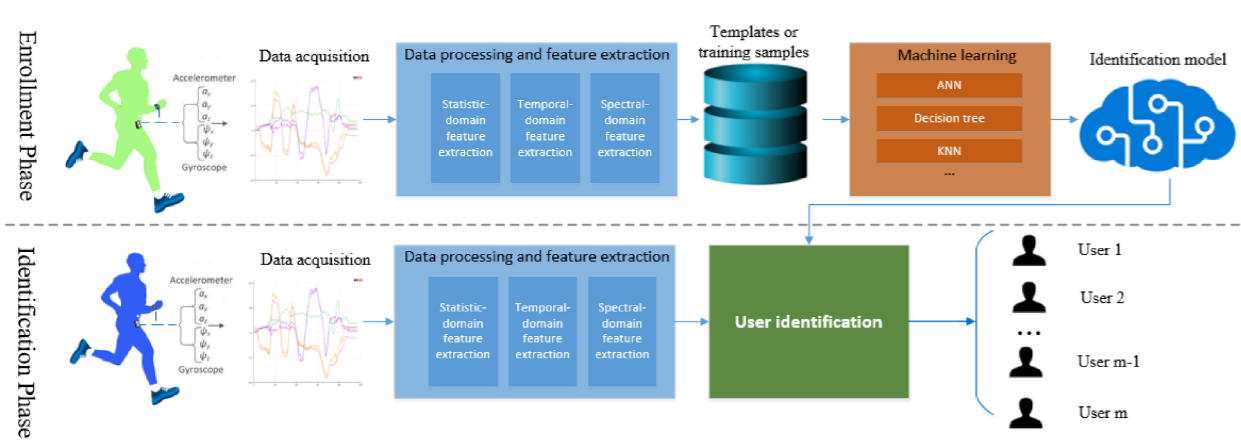
Activity-based person identification using multimodal wearable sensor data
Fei Luo, Salabat Khan, Yandao Huang, Kaishun Wu
IEEE Internet of Things Journal 2022
In this article, we performed person identification using two public benchmark data sets (UCI-HAR and WISDM2019), which are collected from several different activities using multimodal sensors (accelerometer and gyroscope) embedded in wearable devices (smartphone and smartwatch).
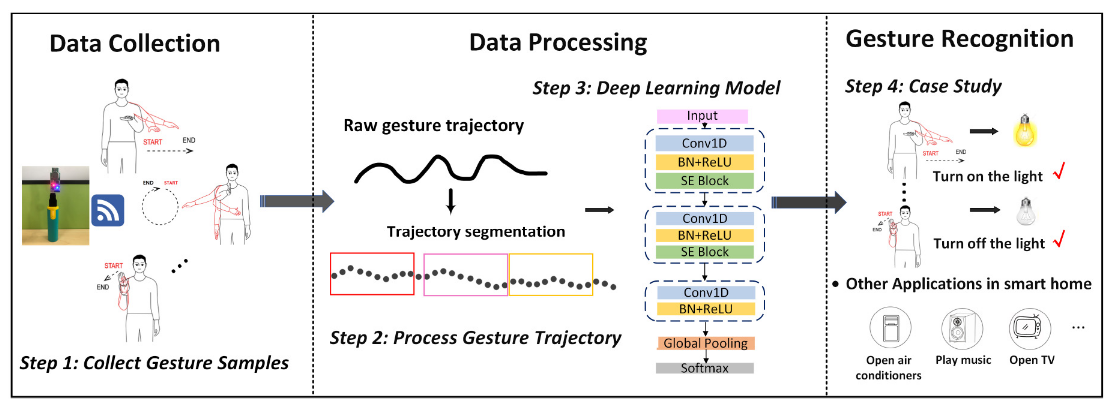
A trajectory-based gesture recognition in smart homes based on the ultrawideband communication system
Anna Li, Eliane Bodanese, Stefan Poslad, Tianwei Hou, Kaishun Wu, Fei Luo
IEEE Internet of Things Journal 2022
In this article, a cost-effective ultrawideband (UWB) communication system for gesture recognition in a smart home environment is proposed, which uses gesture trajectories and a deep learning model.
2021
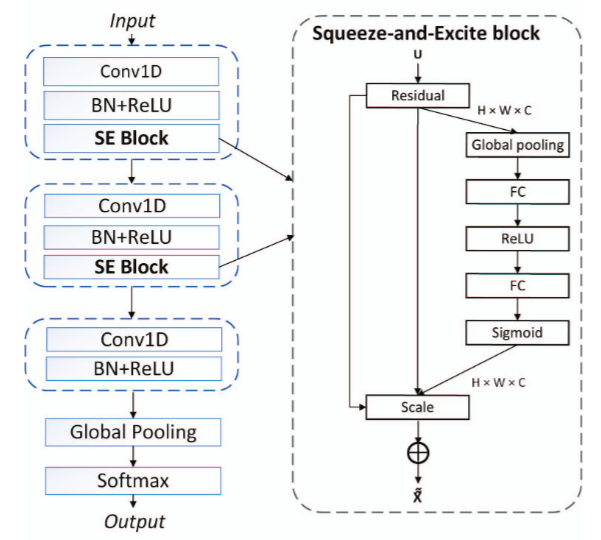
The Ultra-Wideband Communication System: A Human Gesture Recognition Approach
Anna Li, Eliane Bodanese, Fei Luo, Tianwei Hou, Kaishun Wu
IEEE transactions on mobile computing 2021
In this paper, we propose a cost-effective ultra-wideband (UWB) communication system for gesture recognition in a smart home environment, where the interference issues can be beneficially solved.
Binarized neural network for edge intelligence of sensor-based human activity recognition
Fei Luo, Salabat Khan, Yandao Huang, Kaishun Wu
IEEE transactions on mobile computing 2021
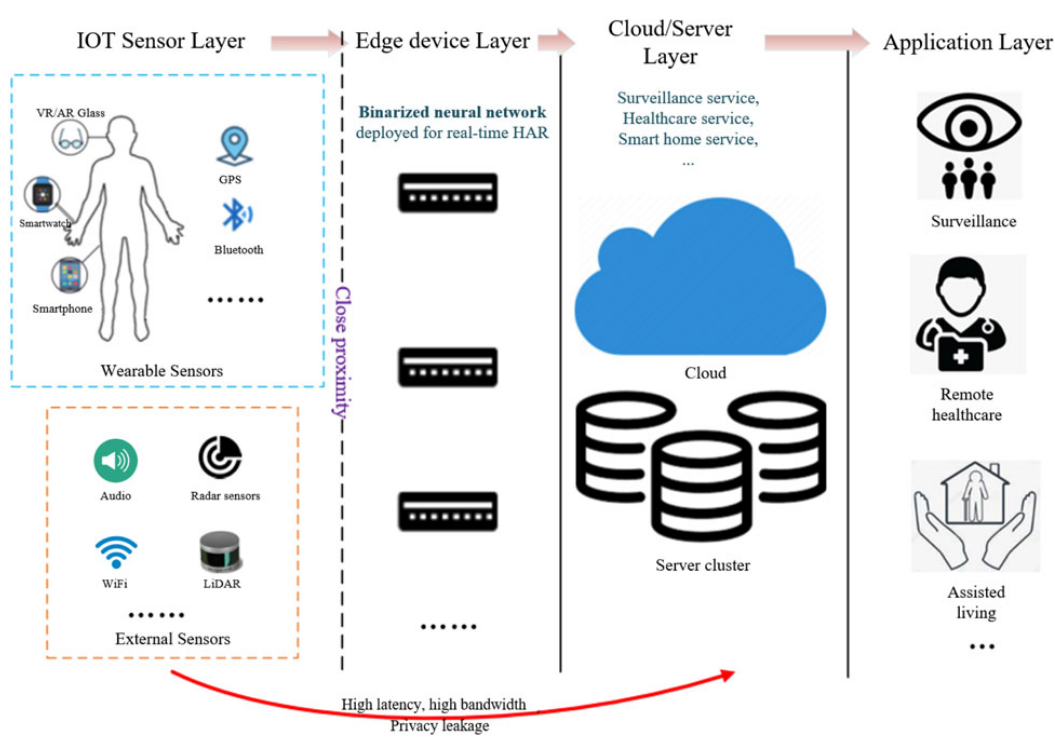
In this paper, we implement a binarized neural network (BinaryDilatedDenseNet) to enable low-latency and low-memory human activity recognition at the network edge. We applied the BinaryDilatedDenseNet on three sensor-based human activity recognition datasets and evaluated it with four metrics. In comparison, the BinaryDilatedDenseNet outperforms the related work and other three binarized neural networks in overall and saves 10× memory and 4.5×–8× inference time compared to the FPDilatedDenseNet(the full-precision version of the BinaryDilatedDenseNet).
2020
Temporal convolutional networks for multiperson activity recognition using a 2-d lidar
Fei Luo, Stefan Poslad, Eliane Bodanese
IEEE Internet of Things Journal 2020
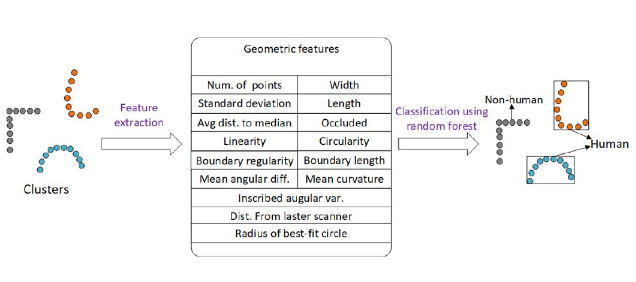
For the clusters of humans, we implemented the Kalman filter to track their trajectories which are further segmented and labeled with corresponding activities. We introduced spatial transformation and Gaussian noise for trajectory augmentation in order to overcome the problem of unbalanced classes and boost the performance of human activity recognition (HAR).
2019
Kitchen Activity Detection for Healthcare using a Low-Power Radar-Enabled Sensor Network
Fei Luo, Stefan Poslad, Eliane Bodanese
ICC 2019 - 2019 IEEE International Conference on Communications (ICC) 2019
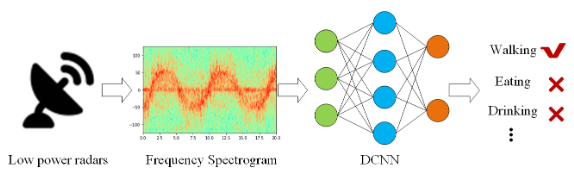
In this paper, we propose a minimal and non-intrusive low-power low-cost radar-based sensing network system that uses an innovative approach for recognizing human activity in the home.
Human activity detection and coarse localization outdoors using micro-Doppler signatures
Fei Luo, Stefan Poslad, Eliane Bodanese
IEEE Sensors Journal 2019
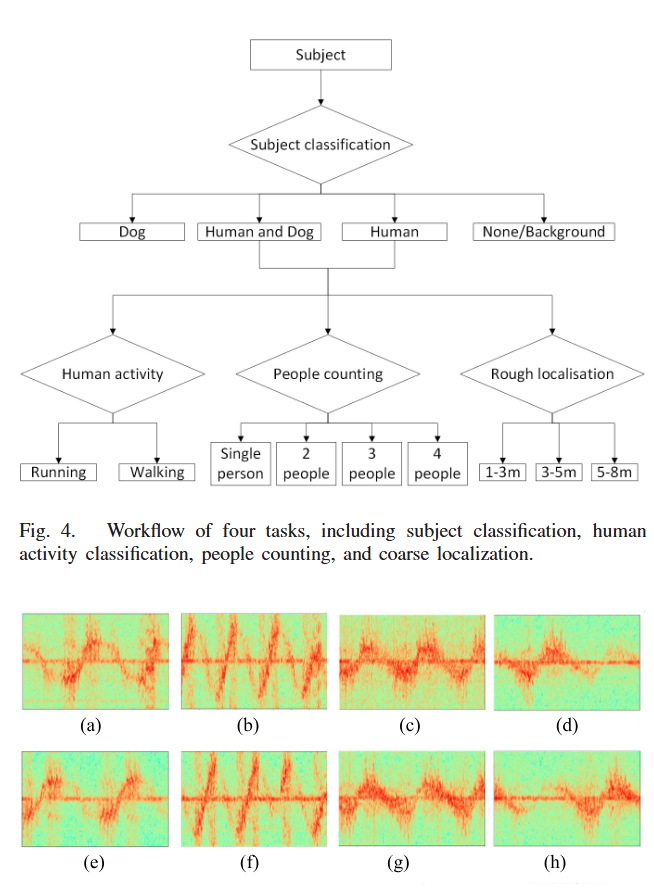
In this paper, we propose novel usage of machine learning techniques to perform subject classification, human activity classification, people counting, and coarse localization by classifying micro-Doppler signatures obtained from a low-cost and low-power radar system.